Choosing the right chocolate machine accessories can shape product quality, production speed, and daily maintenance. A suitable mold, nozzle, scraper, or tempering attachment should match your chocolate type, machine capacity, and working temperature. Small differences matter. A poorly fitted nozzle may create uneven shells, while an unsuitable mold can leave dull surfaces or broken edges.
In practical production, buyers should examine material quality, dimensions, heat resistance, cleaning access, and replacement availability. Food-contact surfaces must be durable, smooth, and easy to sanitize. Stainless steel, food-grade silicone, and reliable engineering plastics are common choices, but each material performs differently. The best accessory is not always the most expensive one. It is the one that supports stable results without slowing the operator.
Many suppliers describe these products as Accessori macchine per il cioccolato, especially in European catalogs. Buyers should confirm compatibility through technical drawings, machine models, and connection measurements. Ask about tolerances, warranty support, testing records, and spare parts. Experienced chocolatiers also check how an accessory behaves after repeated heating, cooling, and washing. That practical detail is often missed.
Avoid choosing only by appearance.
A shiny attachment may still perform poorly. Even experienced buyers get this wrong. It is also wise to test one unit before ordering a full set. Production conditions vary, and a promising accessory may create unexpected waste. This guide explains the main selection factors, helping manufacturers compare options with clearer judgment, realistic expectations, and dependable quality control.
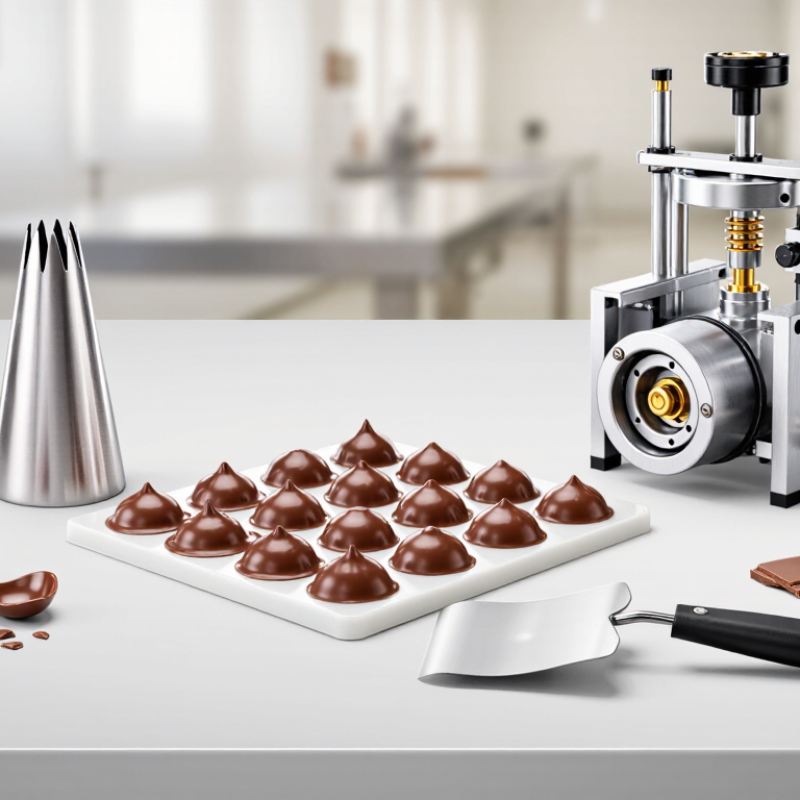
How to Choose Chocolate Machine Accessories?
Chocolate machines rarely operate well without the right accessories. Requirements change with each machine type. A tempering machine needs accurate temperature probes, an agitator, insulated transfer lines, and a cooling unit. A moulding line may require mould heaters, vibration tables, cooling tunnels, and demoulding tools. Enrobing equipment often needs a chocolate pump, curtain regulator, wire belt, and tail cutter. Filling systems depend more on heated hoppers and precise dosing valves. The International Cocoa Organization’s 2023/24 estimates place global cocoa grindings near 4.8 million tonnes. This scale increases the value of stable temperature control and repeatable dosing.
Choose accessories after checking throughput, chocolate viscosity, product shape, and cleaning procedures. PMMI’s 2024 automation reporting identifies labor availability and faster changeovers as continuing production concerns. Quick-release fittings, removable contact parts, and accessible sensors can reduce downtime. However, a larger pump is not always better. Excessive shear may damage inclusions or alter texture. Accessory selection is not perfectly linear.
Tips: Test accessories with the actual chocolate recipe. Check temperature recovery during three consecutive batches. Keep spare probes, seals, and pump components nearby. A common mistake is focusing on machine speed while ignoring cleaning access. That mistake becomes expensive during a busy production week.
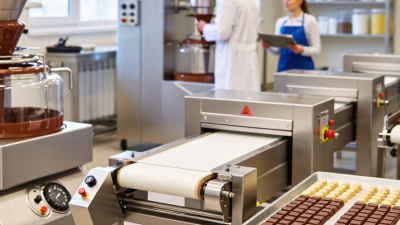
Chocolate machine types and their typical accessory requirements
The chart compares common accessory functions required by different chocolate machine types. Tempering and molding systems generally need precise temperature control, while enrobing and coating equipment also requires pumps, conveyors, cooling, and decorating components. The figures represent typical functional requirements rather than any specific supplier or brand.
Choosing chocolate machine accessories starts with compatibility, not appearance. An elegant mold is useless if its dimensions exceed the machine’s working area. Check the equipment manual, connection drawings, and actual measurements before ordering. Record cavity size, mounting points, voltage, heating range, and production speed. Small differences can cause uneven tempering or awkward cleaning. In workshop testing, a connector that seemed universal needed an extra adapter. That mistake cost setup time. Good checks matter.
Material compatibility deserves equal attention. Food-contact parts should have traceable material information and surfaces without deep seams. Stainless steel may resist corrosion, but its grade and finish still matter. Silicone molds need a temperature rating suited to the selected chocolate process. Match pumps, hoses, and seals to viscosity, heat, and pressure. A hose can fit physically yet restrict flow. Watch for this. Ask suppliers for drawings, tolerances, maintenance instructions, and replacement-part details. Reliable documentation says more than a polished product photo.
Test accessories under real operating conditions. Run a small batch and inspect filling accuracy, release quality, temperature stability, and residue after washing. Check whether operators can remove parts safely while wearing gloves. Compatibility also includes software signals and sensor response on automated equipment. Do not assume identical plugs mean identical control logic. I once approved a tray after a dry fit, then found it flexed when warm. A second test exposed the problem. Leave room for adjustment, because production rarely behaves exactly like a catalogue sample.
How to Choose Chocolate Machine Accessories?
Essential accessories determine whether chocolate processing feels controlled or constantly improvised. Grand View Research valued the global chocolate market at USD 119.39 billion in 2023, with growth expected through 2030. That pressure makes reliable accessories important, even for smaller producers.
Start with accurate temperature control. A calibrated tempering sensor, insulated transfer pipes, and a steady chocolate pump help protect viscosity and crystal structure. Cooling tunnels need adjustable airflow, belt speed, and humidity control. Otherwise, the surface may look dull or develop streaks. Cleanability matters. Choose food-grade contact parts with smooth welds, removable seals, and minimal dead corners. Small gaps can hide residue.
Molds should match the product weight, shape, and release method. Depositors improve portion consistency, while vibration tables reduce trapped air in filled molds. For coated products, an adjustable enrober and chocolate curtain can reduce waste. The PMMI 2024 report identifies labor shortages and automation as continuing investment drivers in food processing. Still, automation is not always the best first purchase. Measure twice. A high-speed accessory may overload a small tempering unit. In production checks, operators should record temperature variation, cleaning time, changeover losses, and rejected pieces. I have seen specifications look impressive on paper, yet maintenance access was poor. That part deserves more thought.
| Accessory | Primary Function | Typical Material | Key Selection Criteria | Useful Operating Range or Capacity | Best Suited For |
|---|---|---|---|---|---|
| Tempering Bowl or Tank | Maintains chocolate in a controlled temperature range to support stable cocoa butter crystallization. | Food-grade stainless steel | Accurate temperature control, even heating, easy cleaning, insulated construction, and compatibility with the machine volume. | Common chocolate working temperatures are approximately 30–32°C for dark chocolate, 29–31°C for milk chocolate, and 28–30°C for white chocolate. | Bars, pralines, molded pieces, and enrobed products |
| Agitator or Mixing Paddle | Keeps melted chocolate homogeneous and reduces temperature variation during processing. | Stainless steel with food-grade polymer components where required | Gentle mixing action, adjustable speed, low product retention, and suitability for the chocolate viscosity. | Variable-speed operation is preferred; low to moderate agitation is generally used to limit aeration. | Melted chocolate holding and continuous production |
| Chocolate Pump | Transfers chocolate from a tank to a depositor, enrober, molding line, or holding vessel. | Food-grade stainless steel | Pump type, flow stability, sanitary design, temperature control, and ability to handle chocolate viscosity without excessive shear. | Capacity must match the process demand; a controllable flow is more important than maximum flow alone. | Continuous lines and equipment installed at different elevations |
| Depositor Nozzle Set | Controls the portion size and dispensing pattern when filling molds, shells, cups, or confectionery products. | Stainless steel | Nozzle diameter, outlet shape, dosing accuracy, changeover time, and ease of disassembly. | Select the outlet size according to product geometry and target portion; smaller outlets provide finer dosing control. | Molded chocolates, filled pieces, bars, and inclusions |
| Enrober Curtain and Bottomer | Applies a continuous chocolate coating to the top, sides, and bottom of products. | Stainless steel and food-grade scraper materials | Uniform curtain width, adjustable coating thickness, stable temperature, and easy cleaning access. | Coating thickness depends on chocolate temperature, viscosity, belt speed, and vibration settings. | Biscuits, bars, wafers, fruit, nuts, and centers |
| Vibrating Table | Releases trapped air bubbles and helps chocolate spread evenly inside molds. | Stainless steel frame and food-grade contact surface | Adjustable vibration intensity, load capacity, low noise, and a surface sized for the molds. | Use short, controlled vibration cycles; excessive vibration can separate inclusions or create uneven layers. | Polycarbonate molds, filled molds, and solid chocolate pieces |
| Molds and Mold Holders | Define the final shape, size, surface finish, and production consistency of chocolate products. | Polycarbonate, silicone, or food-grade metal | Cavity design, dimensional accuracy, impact resistance, release performance, and compatibility with cooling equipment. | Choose mold dimensions and weight according to the depositor, vibration table, cooling tunnel, and handling system. | Bars, pralines, truffles, hollow figures, and seasonal products |
| Cooling Tunnel or Cooling Cabinet | Removes heat from molded or enrobed chocolate to set the product and stabilize its surface. | Insulated panels, stainless steel conveyor parts, and food-safe air-contact components | Temperature uniformity, airflow control, conveyor speed, condensation prevention, and available installation space. | Cooling conditions vary by product; gradual, controlled cooling is generally preferred to reduce blooming and cracking risks. | High-volume molding and enrobing operations |
| Scrapers and Product Wipers | Removes excess chocolate and supports a clean product edge or consistent coating thickness. | Food-grade stainless steel, silicone, or approved polymer | Correct flexibility, wear resistance, smooth edges, and quick replacement. | The working edge must remain straight and free from chips, cracks, or product buildup. | Enrobers, mold lines, and manual finishing stations |
| Temperature Probe and Controller | Measures and regulates chocolate temperature throughout melting, tempering, transfer, and cooling. | Stainless steel probe with food-safe cable and housing | Measurement accuracy, response time, probe placement, calibration capability, and resistance to washdown. | The sensor should cover the expected process range and be calibrated according to the equipment procedure. | All chocolate processing systems |
| Cleaning and Sanitation Kit | Supports removal of chocolate residues and helps maintain hygienic production conditions. | Food-grade brushes, scrapers, containers, and washable tools | Non-shedding bristles, color coding, heat resistance, drainage, and compatibility with the cleaning procedure. | Cleaning frequency should follow the product changeover schedule and the site’s food-safety requirements. | Small workshops and industrial production lines |
| Spare Seals, Gaskets, and Wear Parts | Maintains sanitary sealing and reduces downtime caused by common consumable failures. | Food-grade elastomers and stainless steel retaining components | Correct dimensions, temperature resistance, chemical compatibility, traceability, and ease of replacement. | Keep replacement intervals based on inspection, operating hours, cleaning exposure, and signs of wear. | Pumps, valves, nozzles, tanks, and enrobing equipment |
Choosing chocolate machine accessories starts with production needs, not attractive specifications. A small workshop may need a compact depositor, adjustable molds, and a reliable cooling tunnel. A high-volume line requires stronger pumps, larger hoppers, and continuous temperature control. Match every accessory with the product’s viscosity, batch size, and target output.
Think about the chocolate itself. Thick nut-filled chocolate may need wider pipelines and a slower depositing system. Thin coatings often require steady flow and precise curtain control.
Mold dimensions also matter. A deep mold needs stronger vibration to remove trapped air. Cooling equipment should match the product thickness and room temperature. Otherwise, surfaces may look dull or develop cracks.
Small details matter.
Cleaning requirements deserve equal attention. Removable pipes, accessible valves, and food-grade seals can reduce downtime between recipes. I have seen teams choose fast equipment, then struggle with difficult cleaning after one sticky filling. I once underestimated the value of a spare sensor; production stopped during a simple temperature fault. That mistake changed my selection process. Now, I compare maintenance access, replacement availability, and operator skill before judging capacity. The best accessory is not always the largest or fastest. It is the one that fits today’s workflow and leaves room for realistic growth.
Maintenance, Safety, and Replacement Considerations
Choosing accessories for a chocolate machine starts with daily maintenance needs. In busy production rooms, small parts often decide whether work continues smoothly. Scrapers, seals, nozzles, pumps, and temperature sensors should be easy to remove and clean. Look for food-safe materials with smooth surfaces and minimal hidden joints. These details reduce chocolate buildup and support consistent hygiene.
Safety requires more than a protective cover. Check whether guards fit securely and allow safe inspection without exposing moving parts. Emergency stops, heat-resistant handles, and stable connections deserve careful attention. Accessories should match the machine’s temperature range and electrical requirements. Incorrect sizing can create leaks, overheating, or unexpected movement.
I once underestimated a small seal. It caused a long cleaning delay.
Replacement planning also protects production quality. Keep a record of installation dates, cleaning frequency, and visible wear. Replace cracked tubing, hardened seals, damaged scrapers, and inaccurate sensors promptly. Do not rely only on appearance. Some parts lose flexibility before damage becomes obvious. Confirm dimensions, material compatibility, and operating specifications before ordering. A cheaper substitute may fit physically but perform poorly under heat. Maintenance records can still contain mistakes, so verify measurements on the machine. When uncertain, consult the equipment manual or a qualified technician.
Utilizziamo i cookie per migliorare l'esperienza utente. Per maggiori informazioni, consulta la nostra Cookie Policy.