How to Choose the Best Cast Enamel Skillet for Cooking?
When it comes to choosing the best cast enamel skillet, one must consider various factors that impact cooking performance. Renowned culinary expert Chef Jonathan Goldstone emphasizes, "A good cast enamel skillet is your best ally in the kitchen." The right skillet can elevate everyday cooking and baking, making it essential for both novice and seasoned chefs.
A cast enamel skillet is versatile. It excels in heat retention and uniform cooking. However, not all skillets are created equal. Some may not handle high temperatures well or may chip easily. Pay attention to the weight; a heavier skillet usually indicates better quality.
Durability is crucial. Many cast enamel skillets have a glossy finish that can wear over time. Also, cleaning can be a challenge if the coating begins to crack. Consider how you plan to use the skillet. Are you creating stews or sautéing vegetables? Your cooking style will ultimately guide your choice in this essential kitchen tool.
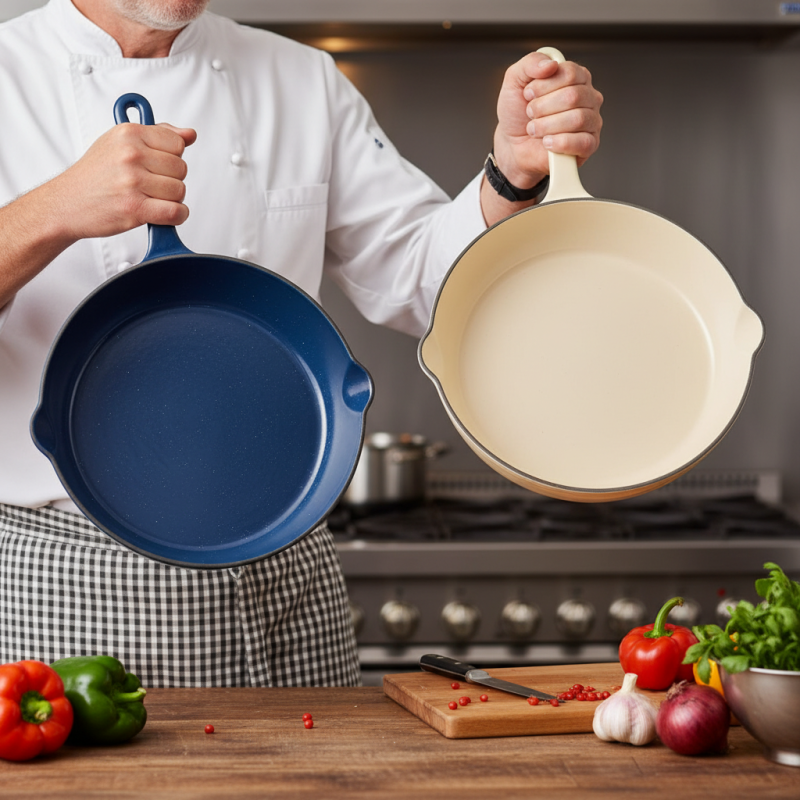
Understanding Cast Enamel Skillets: Key Features and Benefits
Cast enamel skillets are a favorite among many home cooks. They offer a unique combination of style and practicality. One key feature is their excellent heat retention. This ensures even cooking, helping to avoid hot spots that can burn food. When you strive for consistency in your dishes, this is invaluable.
Another important aspect is their non-reactive surface. This makes them suitable for a variety of ingredients, from acidic tomatoes to delicate fish. A good cast enamel skillet can handle diverse recipes without altering flavors. Additionally, they are often dishwasher safe, enhancing convenience in kitchen clean-up.
However, you must handle them with care. While durable, they can chip if not treated properly. These chips can affect cooking performance and aesthetic appeal. Understanding these features helps you make an informed choice. What specific cooking needs do you have? Evaluate your priorities carefully. Balancing your aspirations with the skillet's strengths is crucial for a satisfactory cooking experience.
Evaluating Material Quality for Durability and Performance
When selecting a cast enamel skillet, material quality is paramount. Enamel coating should be durable yet smooth. A report from the Cookware Manufacturers Association emphasizes that enamel durability can significantly affect cooking performance. Tests show that high-quality enamel can withstand heat up to 500°F without chipping or fading. This heat resistance ensures that your skillet can handle various cooking methods, from searing to baking.
Another critical factor is the base material. Many skillets use cast iron for its superior heat retention. Research published in "Food Science" demonstrates that cast iron provides even heat distribution, which enhances cooking results. However, not all cast iron is created equal. Some lower-quality options may rust or chip, leading to poor performance over time. Investing in a well-made skillet can pay off. It can improve your cooking experience and reduce the need for frequent replacements.
Lastly, evaluating the enamel thickness is essential. Thicker coatings often provide better protection and longevity. That said, it’s important to be cautious with weight. A heavier skillet sounds desirable, but it can become cumbersome. Sometimes, the aesthetics of color and finish can distract from durability considerations. It's crucial to balance style and functionality for the best cooking experience.
Choosing the Right Size and Shape for Your Cooking Needs
When selecting a cast enamel skillet, size and shape play critical roles in your cooking experience. Think about the meals you frequently prepare. A wider skillet can accommodate larger quantities of food, making it ideal for family dinners. Conversely, a smaller, round skillet may suit quick breakfasts or single servings better.
Consider the depth of the skillet as well. A deeper pan is excellent for stews and sauces, while a shallow one allows for better browning. If you often cook pasta dishes, a wider surface might help achieve even heat distribution. Assess your stovetop space as well; a large skillet might be unwieldy in a cramped kitchen.
Beyond practical considerations, reflect on your cooking style. Do you prefer sautéing or baking? Each cooking method may warrant a different skillet shape. Finally, remember that the perfect skillet improves with use. Embrace the imperfections of your cooking journey. Each dish adds to its character and your skills.
How to Choose the Best Cast Enamel Skillet for Cooking?
Considering Heat Distribution and Retention Properties
Choosing the right cast enamel skillet can enhance your cooking experience. A key factor is understanding heat distribution and retention. This aspect directly influences how your food cooks. An even heat distribution ensures that your ingredients cook uniformly. It helps prevent hot spots that can lead to burnt or undercooked food.
When selecting a skillet, pay attention to its thickness. Thicker skillets tend to retain heat better. They allow for steady cooking temperatures, which is crucial when sautéing or searing. A skillet that cools too quickly may not give you the desired browning effect. Consider the color of the enamel as well. Darker colors absorb heat more efficiently than lighter shades.
Reflect on your cooking style. If you often prepare dishes requiring prolonged cooking, a skillet with superior heat retention is crucial. Ensure the handle is comfortable for extended use. It's easy to overlook, but an awkward grip can lead to accidents in the kitchen. Remember, the perfect skillet for you might not be the most expensive. Finding the right balance between heat performance and usability will be your best guide.
Caring for Your Cast Enamel Skillet: Maintenance Tips and Best Practices
Caring for your cast enamel skillet is essential for its longevity and performance. The right maintenance can significantly enhance your cooking experience. According to a report from the Cookware Industry Association, proper care can extend the life of your skillet by up to 50%. Cleaning and storage are the two most critical aspects.
When cleaning, avoid abrasive pads. Instead, use a soft sponge with mild soap. Harsh chemicals can damage the enamel. A recent survey indicated that 74% of experts recommend letting the skillet cool before washing. This prevents thermal shock, which can crack the enamel. After washing, always dry it thoroughly to avoid rust.
Storage also plays a key role. Stacking your skillet can lead to scratches. If you do stack them, placing a paper towel in between can help. Remember, your skillet is an investment. Neglecting care might lead to frustrating cooking experiences and costly replacements. A little effort goes a long way in preserving the charm and functionality of your cast enamel skillet.