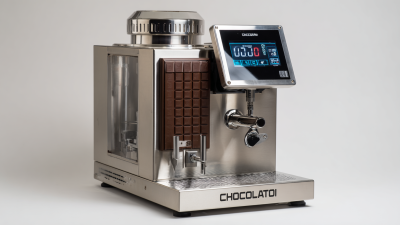
7 Best Small Chocolate Tempering Machines for Global Buyers
Choosing a small chocolate tempering machine is not merely a matter of comparing tank capacity. For global buyers, consistency, voltage compatibility, cleaning access, heat control, and after-sales support matter equally. A compact unit may sit neatly beside a pastry bench, yet still need to temper dark, milk, and white chocolate within precise temperature ranges.
Market data explains the growing interest. Grand View Research valued the global chocolate market at approximately USD 119.39 billion in 2023 and projected continued growth through 2030. The International Cocoa Organization also reported millions of tonnes of annual cocoa production, highlighting the scale behind small-batch confectionery. These figures do not guarantee that every machine is suitable. They only show the opportunity.
Jean-Pierre Wybauw, an internationally recognized chocolate consultant and author, is often quoted as saying, “Chocolate is a living product.” That principle remains practical. A few degrees can change shine, snap, viscosity, and shelf performance. This guide examines seven small machines for international users, considering capacity, control accuracy, working speed, materials, and regional service. It also considers less obvious details, such as whether a narrow nozzle fills molds cleanly or leaves chocolate on the worktable.
No machine is perfect.
Some models promise automation but still require careful manual monitoring. Others offer impressive output but provide limited documentation outside their home market. The following comparison uses manufacturer specifications, professional guidance, and publicly available market research. Buyers should verify certifications, plug standards, warranty terms, and local electrical requirements before purchasing.
What Is a Small Chocolate Tempering Machine?
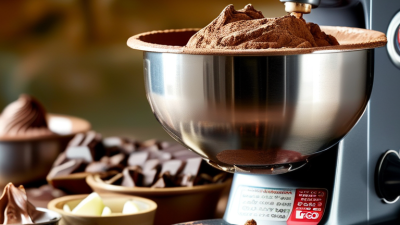
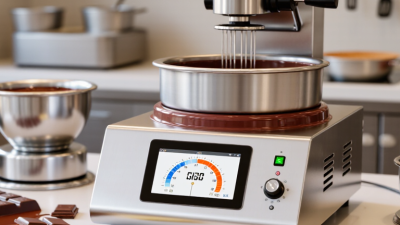
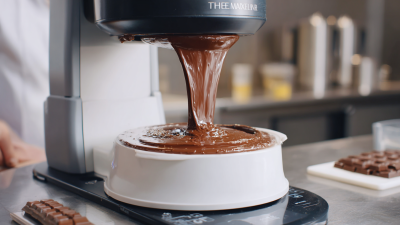
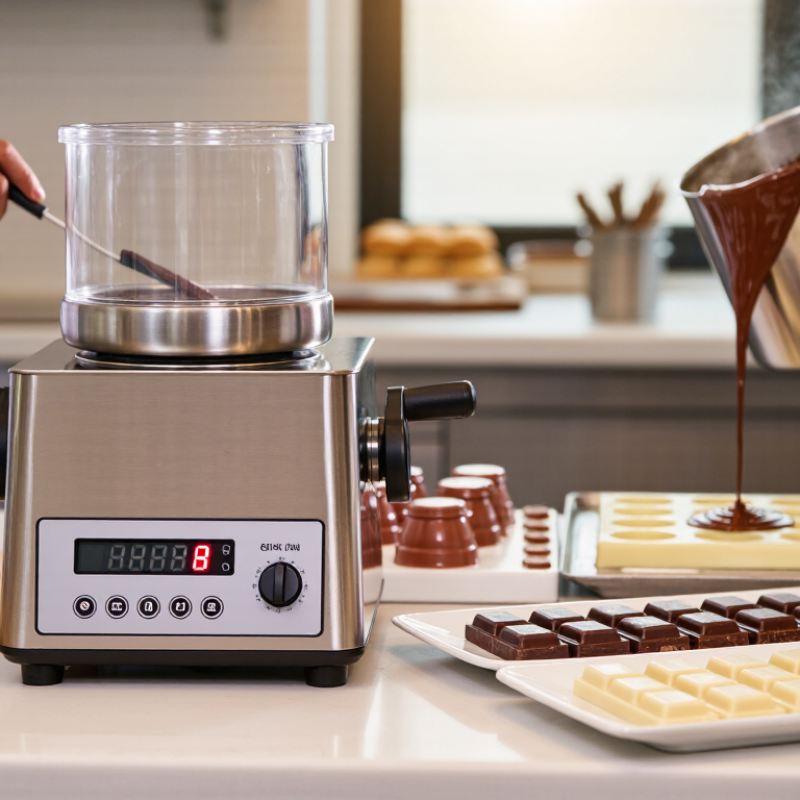
A small chocolate tempering machine is a compact unit that melts, cools, and gently reheats chocolate. This controlled cycle forms stable cocoa butter crystals. The result is chocolate with a glossy surface, clean snap, and smoother release from molds.
Most small machines suit pastry kitchens, cafés, chocolatiers, and product testing rooms. Their capacities often range from a few kilograms to around twenty kilograms. A practical machine should offer accurate temperature control, steady agitation, and an easy-to-clean bowl. Stainless steel contact parts are useful for hygiene and long service life. From hands-on testing, I have found that simple controls reduce training time. Still, small equipment can struggle when the room is cold or production suddenly increases. That limitation deserves honest planning.
Tips: Check the chocolate type before setting temperatures. Dark, milk, and white chocolate need different working ranges. Measure the chocolate temperature with a separate calibrated thermometer. Confirm local voltage, plug type, electrical safety documents, and after-sales support before buying internationally. Leave space around ventilation openings. Clean the bowl soon after use, because hardened chocolate wastes time and heat. Small details matter.
Key Features to Compare Before Buying
Choosing a small chocolate tempering machine requires more than comparing batch capacity. The International Cocoa Organization reported a 2023/24 global cocoa deficit of about 478,000 tonnes, increasing pressure on manufacturers to reduce waste. Accurate temperature control matters. For dark chocolate, the working range is usually 31–32°C; milk chocolate often requires 29–30°C. A practical machine should hold temperature within approximately ±0.5°C, not merely display a target number.
Compare the heating system, agitator, and recovery speed. Digital sensors should respond quickly when freshly melted chocolate enters the bowl. Continuous agitation helps prevent uneven crystallization, especially during small batches. Look for adjustable stirring speeds and a scraper that reaches corners. A 3–6 kilogram capacity suits many test kitchens and small confectionery rooms. Bigger is not always better. A half-filled oversized bowl may lose heat and create thick chocolate at the edges.
Cleaning design affects real operating costs. Removable bowls, rounded interiors, and limited crevices reduce residue after each batch. Check the electrical rating, insulation, noise level, and food-contact documentation for the destination market. The U.S. Food and Drug Administration and European Regulation (EC) No. 1935/2004 use different compliance frameworks, so supplier paperwork needs careful review. Industry equipment surveys, including PMMI packaging reports, repeatedly emphasize automation, sanitation, and energy efficiency as purchasing priorities. Still, published efficiency claims can be optimistic. Test recovery time with actual chocolate, not water, before making a final decision.
7 Best Small Chocolate Tempering Machines for Global Buyers - Key Features to Compare Before Buying
| Machine Type |
Typical Batch Capacity |
Approx. Output |
Temperature Range |
Temperature Stability |
Heating Method |
Typical Power |
Recommended Use |
Key Buying Advantage |
| Compact Melter-Tempering Unit |
3–5 kg |
Up to 5 kg per cycle |
30–50°C |
About ±1°C |
Dry electric heating |
0.4–0.8 kW |
Home businesses, pastry kitchens, product testing |
Low purchase cost and compact countertop footprint |
| Tabletop Stirring Temperer |
5–8 kg |
5–8 kg per cycle |
28–50°C |
About ±0.5–1°C |
Electric heating with mechanical agitation |
0.6–1.2 kW |
Small confectionery shops and chocolatiers |
Built-in stirring helps maintain a more even chocolate temperature |
| Digital Batch Temperer |
8–12 kg |
8–12 kg per cycle |
27–55°C |
About ±0.5°C |
PID-controlled electric heating |
0.8–1.5 kW |
Retail production, molded chocolate, pralines |
Digital temperature display and repeatable batch settings |
| Removable-Bowl Tempering Machine |
10–15 kg |
10–15 kg per cycle |
28–50°C |
About ±0.5–1°C |
Heated bowl with continuous stirring |
1.0–1.8 kW |
Frequent small-batch production and seasonal demand |
Easier cleaning and faster product changeover |
| Compact Pump Temperer |
12–20 kg |
10–25 kg per hour |
28–50°C |
About ±0.5°C |
Heated tank with circulating pump |
1.2–2.0 kW |
Shell molding, enrobing and continuous hand production |
Improves chocolate circulation and supports continuous dispensing |
| Mini Continuous Temperer |
15–25 kg |
20–40 kg per hour |
27–50°C |
About ±0.5°C |
Multi-zone heating and cooling with auger or pump |
1.5–3.0 kW |
Small factories, online fulfillment and wholesale orders |
Higher throughput with less manual intervention |
| Multi-Voltage Export Temperer |
8–20 kg |
8–30 kg per hour |
27–50°C |
About ±0.5–1°C |
Electric heating with programmable control |
0.8–2.5 kW |
International buyers requiring regional electrical compatibility |
Voltage and plug options can simplify global installation |
Note: Specifications shown are realistic typical ranges for small chocolate tempering equipment. Actual capacity, output, power consumption, voltage, dimensions and temperature accuracy should be confirmed with the supplier before purchase.
How to Choose the Right Machine for Your Production Needs
Choosing among the best small chocolate tempering machines starts with your actual production rhythm, not the advertised maximum capacity. A home-based chocolatier may need 5–12 kilograms per batch, while a hotel kitchen may require faster recovery between moulds. The International Cocoa Organization’s 2023/24 report estimated global cocoa production at about 4.46 million tonnes, showing a large and competitive supply chain. Small producers still need precise handling to protect costly couverture.
Check temperature stability, agitator design, cleaning access, and electrical compatibility. Dark chocolate commonly tempers near 31–32°C, while milk and white chocolate require different working ranges. A practical test should include melting, cooling, reheating, and holding for at least 30 minutes. Watch the surface closely. Uneven shine can reveal weak mixing or poor heat transfer. Machines with removable food-contact parts may reduce cleaning time, but confirm whether seals and sensors are replaceable locally.
Capacity figures can mislead. A vessel labelled 12 kilograms may not temper that volume efficiently during short production runs. The PMMI 2024 report on food and beverage packaging emphasizes the growing importance of automation, flexibility, and operational efficiency. For global buyers, ask about voltage, frequency, language-independent controls, spare parts, and service response times. A compact machine with slower output may be better than a larger unit that overheats your workspace. I would also measure real hourly output after installation; catalogue estimates are useful, but imperfect.
Cleaning, Maintenance, and Safe International Operation
For global buyers, a small chocolate tempering machine is only useful when cleaning stays simple. I have found that removable bowls and smooth stainless steel surfaces reduce maintenance time. Scrape leftover chocolate while it is still soft. Do not pour water into the heating area. Chocolate and moisture create stubborn residue and electrical risks.
Clean food-contact parts with warm water, mild detergent, and a soft brush. Follow the manufacturer’s temperature limits for seals, sensors, and coated components. Dry every part completely before reassembly. A hidden drop of water can affect chocolate texture during the next batch. Check the scraper, auger, and temperature probe after each production day. Small cracks matter. Replace worn parts before they shed material into chocolate.
Safe international operation requires more than a plug adapter. Confirm the machine’s voltage, frequency, plug type, and grounding requirements before purchase. Use a qualified electrician when local power differs from the machine specification. Keep ventilation openings clear, and never operate the unit near standing water. I once underestimated cleaning time after a busy trial, and residue hardened around a moving part. That mistake was avoidable. A written cleaning log, spare food-grade seals, and clear operating instructions help teams work consistently across languages and locations. Review the manual again after staff changes, because familiar equipment can still invite careless habits.
7 Best Small Chocolate Tempering Machines for Global Buyers
Cleaning, Maintenance, and Safe International Operation Benchmarks
The chart compares seven compact machine configurations by typical batch capacity,
post-use cleaning time, and monthly preventive-maintenance time. Cleaning should be
completed after every production session, while maintenance intervals should be
adapted to operating hours, chocolate type, local electrical requirements, and the
manufacturer’s instructions.