FBM Boscolo

Best Chocolate Tempering Machine 2026 for Buyers

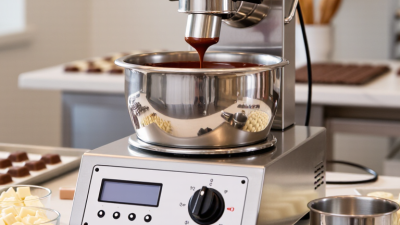
Choosing the best chocolate tempering machine in 2026 depends on more than capacity or price. Buyers should consider how often they temper chocolate, which varieties they use, and how much space the machine requires. A compact countertop model may suit a small bakery, while regular production can call for greater capacity and easier cleaning. Small details matter. A clear temperature display, steady stirring, and a bowl that is simple to remove can make busy work less frustrating.

This guide compares practical features, including heating control, batch size, operating effort, and maintenance. It also explains where a manual method may be enough and when a machine can offer more consistent support. If you are searching for a temperatrice di cioccolato, check that the machine’s stated capacity matches your actual batch size; a larger bowl does not automatically mean better results. Chocolate type, room temperature, and handling still affect the finish. There is no single model that fits every kitchen. A comparison table can help, but it cannot replace checking the manual or considering your own workflow. Some product specifications are not easy to compare, and that is worth admitting. Treat performance claims carefully, and look for clear warranty and cleaning information before buying. The right choice is the one your team can use reliably, not merely the one with the most features.
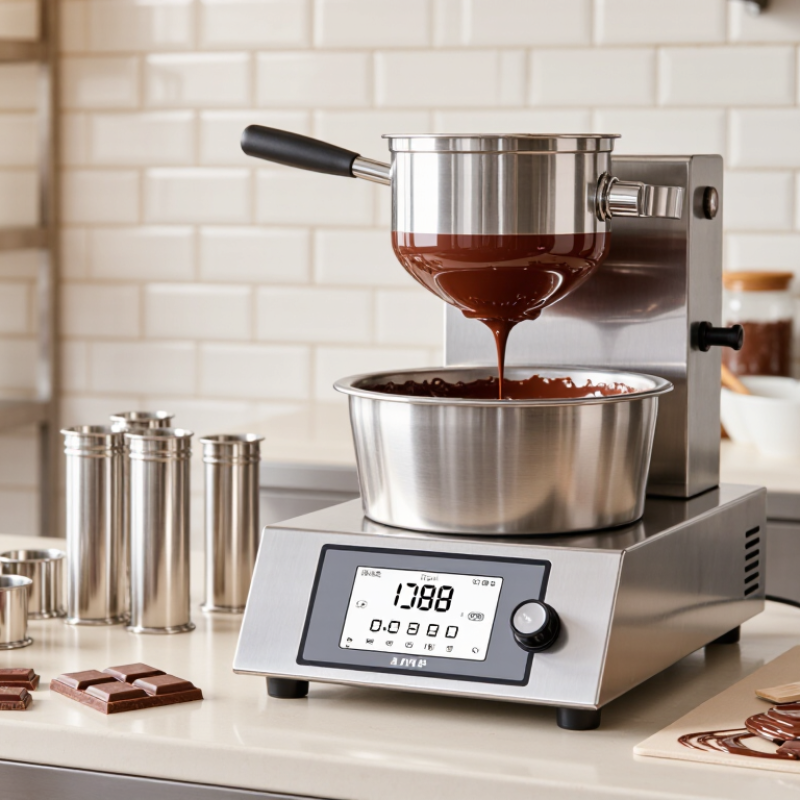
Best Chocolate Tempering Machine 2026 for Buyers

Tempering Science: Six Cocoa Butter Polymorphs and Stable Form V Crystals

Tempering Science: Six Cocoa Butter Polymorphs and Stable Form V Crystals

Cocoa butter can crystallize in six polymorphic forms, labeled I through VI. They differ in crystal structure, melting behavior, and stability. Forms I and II melt easily, so chocolate containing them may feel soft or look dull. Forms III and IV are firmer, but still less reliable for a clean snap.

Form V is the target: it supports gloss, contraction from molds, and a crisp bite.

A tempering machine guides chocolate through controlled heating, cooling, and reheating. This process encourages stable Form V crystals while melting many unwanted crystals. The exact temperatures depend on the chocolate’s recipe, so a machine’s setting is a starting point, not a guarantee. A probe thermometer and a small test piece can reveal problems: streaks, slow setting, or a weak snap. Small details matter.

Form V is stable enough for finished chocolate, but it is not permanent. Over time, some crystals may reorganize into Form VI, contributing to fat bloom and a pale surface. That change is easy to overlook. A tidy tempering curve cannot fix poor storage or repeated temperature swings. It is tempting to treat the curve as a promise. It isn’t. Check the chocolate itself, and adjust carefully when the room, batch size, or recipe changes.
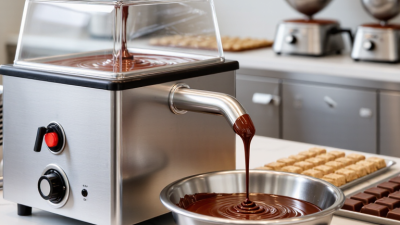
Typical Working Temperatures: Dark 31–32°C, Milk 29–30°C, White 28–29°C

Best Chocolate Tempering Machine 2026 for Buyers

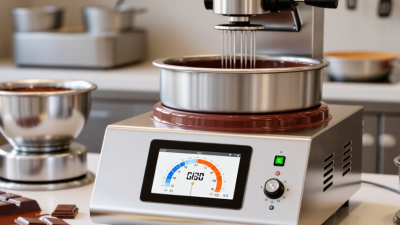
Choosing a chocolate tempering machine starts with temperature control, not just capacity. Typical working temperatures are 31–32°C for dark chocolate, 29–30°C for milk, and 28–29°C for white chocolate. These are working ranges, not universal settings. Small shifts matter. A display showing whole degrees may hide meaningful changes, especially with a small batch.

During setup, let the machine stabilize, then check the chocolate with a clean, calibrated probe. Stir gently and sample from more than one spot; a warm pocket near the bowl wall can mislead you. Dark chocolate generally has a higher working range, while milk and white chocolate can be more sensitive to overheating. Follow the chocolate maker’s technical guidance if it differs from these typical figures.

Watch the chocolate’s flow and setting behavior, too. Properly tempered chocolate should look glossy and set evenly, though room temperature, moisture, and recipe can affect the result. It is tempting to trust the display alone, but that can be a mistake. If pieces remain streaky or soft, adjust in small increments and allow the machine time to respond. A small test on parchment can help reveal whether the batch is setting as expected.

Machine Types: Compare Batch and Continuous Tempering Systems

Best Chocolate Tempering Machine 2026 for Buyers

Machine Types: Compare Batch and Continuous Tempering Systems

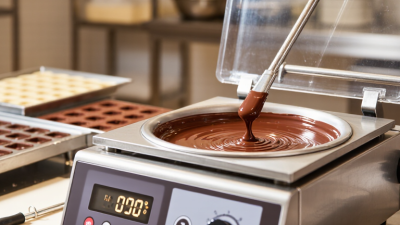
Batch tempering machines suit small shops, test kitchens, and makers producing several chocolate varieties. They heat and cool a measured quantity, so operators can adjust recipes between batches. A bowl of couverture may temper well, but timing and careful stirring still matter. That matters. Batch output can vary when room temperature changes or staff rush the cooling stage. These machines often fit buyers who value flexibility over uninterrupted production.

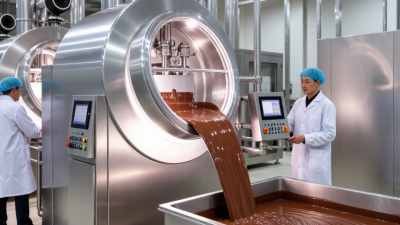
Continuous tempering systems move chocolate through controlled heating, cooling, and reheating zones. They can support steady production when demand is predictable and the machine is properly set up. Operators still need to monitor flow, temperature, and chocolate condition; automation does not remove process checks. Cleaning and changeovers may take time, especially when switching chocolate types. In practice, the neat comparison can blur: a growing small business may outpace a batch machine, while a continuous unit may sit underused during quiet weeks. Not always.

Tips: Estimate your busiest realistic production day, not just your average. Check cleaning access, electrical requirements, and service support. Run a small test batch before committing to a production schedule.

Capacity Planning: Match Machine Output in kg/h to Production Demand

A tempering machine should be sized to the chocolate that must pass through it, not the factory’s hoped-for peak. The European Cocoa Association reported 331,762 tonnes of European cocoa grindings in the fourth quarter of 2024, down 5.4% year on year. That industry figure signals a shifting market, but it cannot predict an individual workshop’s orders. Use actual production records, seasonal peaks, and planned product mix.

Try this calculation: required hourly output equals daily tempered chocolate demand divided by productive hours and realistic utilization. If a shift needs 120 kg over six productive hours, and cleaning, loading, and changeovers leave 75% effective running time, the machine needs about 27 kg/h. Not 20. A small gap matters. Check whether the stated kg/h applies to your chocolate type and operating conditions; catalog capacity alone may not reflect real throughput.

Also verify minimum batch size, holding capacity, and recovery time after adding chocolate. A machine rated far above daily demand can leave small batches sitting too long, while an undersized unit may create queues before molding. Ask suppliers for a trial using your recipe, target temperature, and batch size. Record actual output across several runs. The numbers may look less tidy than the plan. That is useful.

Buyer Checks: Temperature Control, Cleaning, and Food-Contact Materials

Best Chocolate Tempering Machine 2026 for Buyers

When comparing tempering machines, look beyond the displayed temperature. Typical working ranges are about 31–32°C for dark chocolate, 29–30°C for milk, and 28–29°C for white chocolate. Recipes and chocolate composition can shift these figures. A narrow, steady control range helps prevent dull finishes and soft snap. Still, a precise screen is not proof of precise chocolate temperature.

Check cleaning access before buying. Can the bowl, agitator, and splash-prone surfaces be removed or reached without awkward tools? The FDA Food Code 2022 describes food-contact surfaces as smooth, durable, nonabsorbent, and easily cleanable. NSF/ANSI 51 also covers materials used in food equipment. Look for clear material documentation, not just a “food grade” claim. Small seams can hold residue. They are easy to miss.

Ask how the machine’s temperature sensor is checked, and compare its display with a calibrated probe during a real batch. The FDA Food Code 2022, section 4-203.11, specifies thermometer accuracy within ±1°C (±2°F) across 0–100°C. That requirement applies to food temperature-measuring devices, not automatically to every machine controller. A machine may need adjustment. Record readings, cleaning steps, and batch results; that simple log can reveal drift before it ruins a costly bowl of chocolate.

Best Chocolate Tempering Machine 2026: Buyer Checks

Typical working-temperature targets for couverture chocolate. Exact targets vary by chocolate formulation, so follow its supplier’s guidance and verify the machine’s temperature stability.

Cleaning: Check that parts requiring regular cleaning are accessible and removable according to the manufacturer’s instructions. Food-contact materials: Request documentation confirming that product-contact surfaces meet applicable food-contact requirements in your market.